
Complete Guide To Flooring Contractors In Canada
Flooring is one of the most visible and durable investments you'll make in your home. Whether you're replacing worn-out carpeting, installing luxury vinyl in a kitchen, or refinishing original hardwood, hiring the right flooring contractor is essential to achieving quality results that last for decades. This comprehensive guide will help Canadian homeowners understand what flooring contractors do, how to hire them, what to expect to pay, and how to avoid costly mistakes.
What Flooring Contractors Do
Flooring contractors are skilled tradespeople who specialize in the installation, repair, and refinishing of various flooring materials. Their expertise extends beyond simply laying down new floors, they assess existing conditions, prepare subfloors, manage moisture issues, ensure proper transitions between rooms, and deliver finished results that meet building codes and aesthetic expectations.
A professional flooring contractor understands how different materials respond to Canadian humidity and temperature fluctuations, which is critical in a country with extreme seasonal variations. They work with hardwood, laminate, luxury vinyl plank (LVP), tile, carpet, cork, and engineered wood products. Their knowledge of substrate preparation, acclimation requirements, and installation techniques directly impacts how well your floor performs over time.
Types Of Flooring Work Performed
Hardwood Floor Installation And Refinishing
Solid hardwood and engineered hardwood installation requires precise moisture management, especially in Canadian climates. Contractors prepare the subfloor, acclimate wood to the home's humidity levels, install using appropriate fastening methods, sand, stain, and finish the surface. Refinishing existing hardwood involves sanding, repairing damage, staining to desired color, and applying protective topcoats.
Laminate And Luxury Vinyl Installation
These popular budget-friendly options require proper underlayment, precise cutting, and careful attention to expansion gaps. Contractors ensure moisture barriers are in place, particularly in basements and kitchens, and that planks are laid straight and tightly fitted.
Tile And Stone Installation
Tile work demands expertise in substrate preparation, waterproofing, mortar application, grout selection, and finishing. Contractors must understand slope requirements for bathrooms and kitchens to prevent water damage and select appropriate grout for the application.
Subfloor Preparation And Repair
Before any flooring is installed, the subfloor must be evaluated and prepared. This includes leveling uneven surfaces, replacing damaged sections, addressing moisture problems, and installing appropriate underlayment.
Typical Project Scope
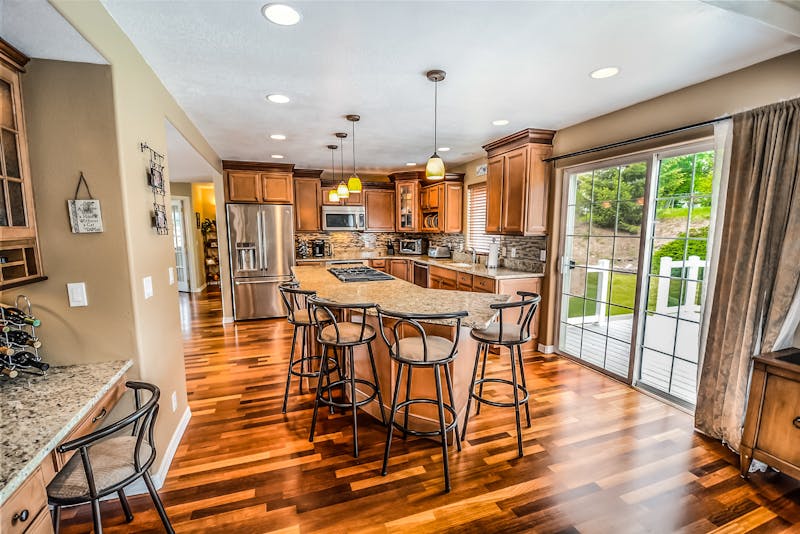
A standard flooring project might involve replacing flooring in two to three rooms, totaling 150 to 300 square feet. This typically takes three to seven working days, depending on material type, subfloor condition, and whether existing flooring must be removed. Larger projects spanning an entire home or multiple levels can take two to three weeks. Projects that require subfloor repairs, moisture remediation, or extensive surface preparation will take longer and cost more than straightforward installations.
How To Hire A Flooring Contractor
Verify Credentials And Licensing
Requirements vary by province. In Ontario, for example, flooring contractors may need to be registered with the Ministry of Labour or hold trade certifications. In British Columbia, contractors working with certain materials must hold valid certifications. Always verify that your contractor carries liability insurance and workers' compensation coverage. Ask to see proof of credentials before accepting a quote.
Questions To Ask Potential Contractors
- How many years of experience do you have with this specific flooring type?
- Can you provide recent references from homeowners in my area?
- Will you handle subfloor inspection and any necessary repairs?
- What is your timeline, and how do you handle delays?
- Do you acclimate materials before installation, and if so, how long?
- What warranty do you offer on labor, and what does it cover?
- How do you handle moisture testing and prevention?
- Will you provide a detailed written estimate before starting work?
What A Good Quote Should Include
A professional quote breaks down all costs transparently: material costs per square foot, labor costs, removal of existing flooring, subfloor preparation or repair, underlayment, trim and transitions, and finishing treatments. It should specify the exact product brand and grade, warranty details, timeline with start and completion dates, payment terms, and any conditions or exclusions. Vague quotes that lump everything into a single figure should be avoided.
Comparing Quotes
Obtain at least three quotes for any flooring project. Don't automatically choose the lowest price, as this often reflects cut corners or underestimation. Compare apples to apples, ensuring each quote addresses the same scope of work, material quality, and timeline. A mid-range quote from an established, well-reviewed contractor is usually the safest choice.

Cost Ranges For Flooring In Canada, 2026
All prices are in Canadian dollars and include both materials and labor:
- Laminate flooring: $4 to $10 per square foot
- Luxury vinyl plank (LVP): $5 to $12 per square foot
- Engineered hardwood: $8 to $15 per square foot
- Solid hardwood: $12 to $25 per square foot
- Ceramic or porcelain tile: $8 to $18 per square foot
- Natural stone tile: $15 to $35 per square foot
- Cork flooring: $7 to $14 per square foot
- Hardwood refinishing: $6 to $12 per square foot
Additional costs apply for subfloor repair ($10 to $25 per square foot if needed), moisture remediation ($1,500 to $5,000 depending on severity), and removal of existing flooring ($2 to $5 per square foot). Regional variations exist, with urban centers in Ontario, British Columbia, and Alberta typically running 10 to 20 percent higher than rural areas. Projects in Atlantic Canada generally cost slightly less than central Canada.
Red Flags To Watch For
- Unwillingness to provide written estimates: Professional contractors always provide detailed written quotes.
- Refusing to show credentials or insurance: This is a dealbreaker. Never hire someone who won't prove they're insured and licensed.
- Requesting full payment upfront: Legitimate contractors ask for a deposit (typically 30 to 50 percent) with the balance due upon completion.
- Avoiding moisture testing: Any contractor who skips moisture testing before installation is cutting corners that could lead to buckling, mold, or failure.
- Guaranteeing results without assessing your space: Proper evaluation takes time. Contractors who provide quotes based solely on phone descriptions may miss critical issues.
- Pressure to decide quickly: Legitimate contractors don't rush you into decisions. Take time to compare quotes and check references.
- No warranty offered: Reputable contractors stand behind their work with written labor warranties of at least one year.
Frequently Asked Questions
How Long Does Flooring Installation Typically Take?
Most residential flooring installations take three to seven days for a single room or two to three rooms. Hardwood refinishing can take five to ten days depending on the square footage and condition. Large whole-home projects may require two to four weeks. Weather, subfloor issues, and material availability can extend timelines.
Do I Need To Acclimate Materials Before Installation?
Yes, absolutely. Hardwood and engineered wood must acclimate to your home's humidity levels for 48 to 72 hours before installation. Canadian homes have varying humidity levels seasonally, and failure to acclimate can result in cupping, crowning, or gaps between planks. Laminate and vinyl typically require 24 hours of acclimation. Professional contractors always plan acclimation time into their schedule.
What's The Difference Between Engineered And Solid Hardwood?
Solid hardwood is 100 percent real wood throughout and can be refinished multiple times over its lifetime. Engineered hardwood has a real wood veneer on top with a plywood base, making it more stable in fluctuating humidity and resistant to cupping. Engineered wood cannot be refinished as many times as solid wood. Engineered is ideal for basements or kitchens in Canada where moisture can be problematic.
How Much Does Moisture Remediation Cost?
Moisture remediation varies significantly based on the problem's severity. Minor moisture control (sealing cracks, improving ventilation) costs $500 to $1,500. Comprehensive solutions involving sump pumps, vapor barriers, or dehumidifiers range from $2,000 to $5,000. In severe cases, structural repairs can exceed $10,000. Address moisture issues before installing new flooring to prevent damage.
What Warranty Should I Expect?
Most reputable flooring contractors offer one to five year labor warranties. Material warranties come from manufacturers and vary by product, typically ranging from 10 to 25 years. Read warranty terms carefully, as many require proper installation, maintenance, and acclimation to remain valid. Ask your contractor to provide written warranty documentation before work begins.
Conclusion
Hiring a professional flooring contractor ensures your investment lasts decades while maintaining its beauty and structural integrity. Take time to verify credentials, compare multiple quotes, ask detailed questions, and check references. Understand the true cost of your project, not just the price, and watch for red flags that indicate inexperience or unreliability. Ready to find a trusted flooring contractor in your area? Find a Flooring Contractor through Local Skilled Trades today.
Local Skilled Trades Editorial
Home Services Expert