
Hardwood vs Engineered Flooring in Canada: What to Know
Choosing the right flooring for your Canadian home is one of the most important decisions you'll make during renovation or construction. Between hardwood and engineered flooring, both offer beauty and durability, but they perform very differently depending on your climate, budget, and lifestyle. This comprehensive guide will help you understand the key differences, advantages, and limitations of each option so you can make an informed choice for your space.
Understanding The Basics: Hardwood vs Engineered Flooring
Solid hardwood flooring consists of planks milled from a single piece of wood. These planks are typically 3/4 inch thick and run the full depth of the board. Popular species in Canada include oak, maple, and walnut. Solid hardwood is sanded and finished on-site or pre-finished at the factory.
Engineered hardwood flooring features a thin veneer of real hardwood bonded to a plywood or high-density fiberboard base. The cross-grain construction of the base layer makes engineered flooring more dimensionally stable, meaning it resists warping and cupping caused by moisture and temperature changes. The veneer is typically 2 to 6 millimetres thick.
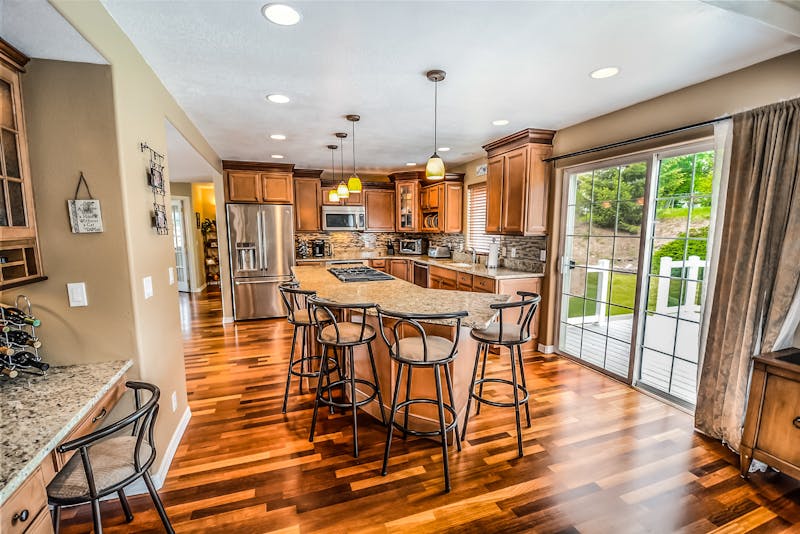
Cost Comparison in Canadian Dollars
Budget is often the primary factor in flooring decisions for Canadian homeowners.
Solid Hardwood Costs
- Material cost: $8 to $15 CAD per square foot for standard species
- Premium species (walnut, ash): $15 to $25 CAD per square foot
- Installation: $6 to $12 CAD per square foot
- Finishing (on-site): $3 to $8 CAD per square foot
- Total installed cost: $17 to $45 CAD per square foot
Engineered Hardwood Costs
- Material cost: $4 to $10 CAD per square foot
- Premium options: $10 to $18 CAD per square foot
- Installation: $4 to $8 CAD per square foot (typically faster)
- Pre-finished, no on-site finishing required
- Total installed cost: $8 to $26 CAD per square foot
For a typical 2,000 square foot main floor installation, engineered flooring can save you $3,000 to $8,000 CAD compared to solid hardwood.
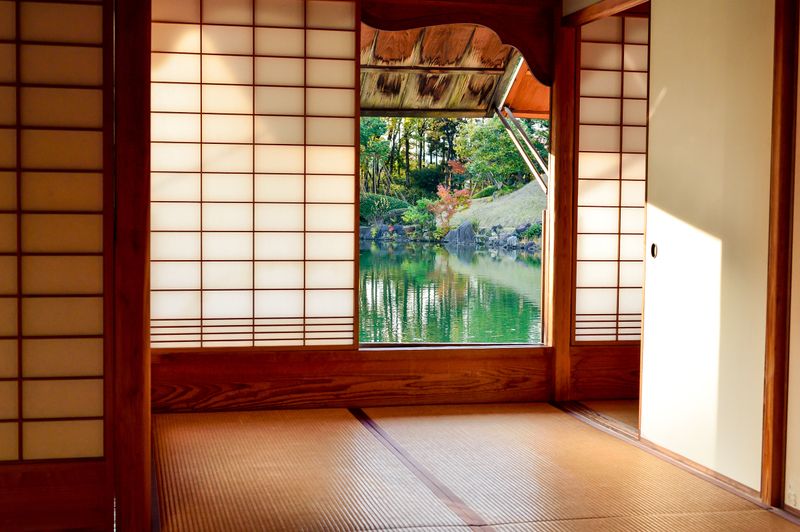
Lifespan and Durability Across Canada
Canada's diverse climate, from the humid summers of Ontario to the dry prairie winters of Alberta and the moisture-heavy Pacific Northwest, significantly impacts flooring longevity.
Solid Hardwood Lifespan
Expected lifespan: 25 to 30 years with proper care, potentially 50 to 100 years with refinishing.
Solid hardwood is incredibly durable once acclimated to your home's environment. The main challenge in Canadian climates is moisture fluctuation. In provinces with extreme seasonal changes, solid hardwood can expand and contract, leading to gaps and cupping. However, with proper humidity control (ideally 30 to 50 percent), solid hardwood performs exceptionally well. Refinishing every 7 to 10 years restores its appearance and extends lifespan significantly.
Engineered Hardwood Lifespan
Expected lifespan: 15 to 25 years, sometimes longer with quality products.
Engineered flooring's cross-grain plywood base makes it far more resistant to warping in fluctuating Canadian humidity. This is especially valuable in basements, kitchens, and bathrooms where moisture is present. However, the veneer is thinner, so refinishing options are limited. Some engineered products allow one light sanding and refinish, while others cannot be refinished at all. Once the veneer wears through, replacement is your only option.
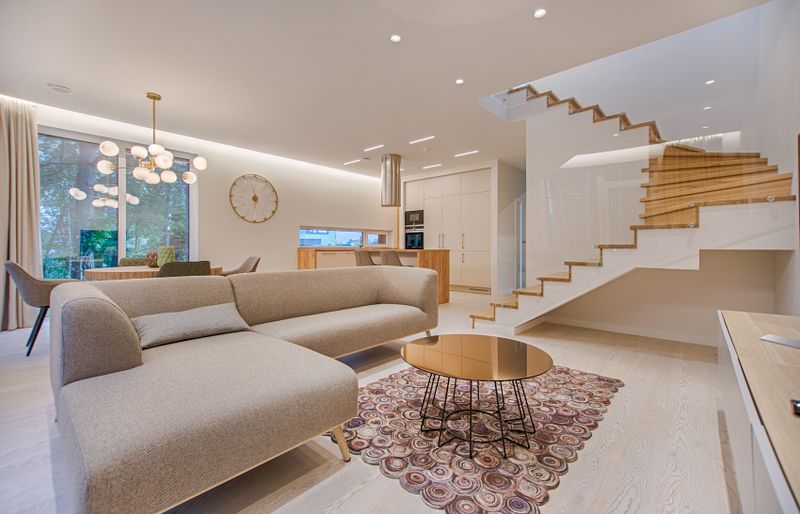
Maintenance Requirements
Solid Hardwood Maintenance
- Vacuum or sweep weekly to remove dirt and grit
- Damp mop (not wet) with hardwood-specific cleaner every 2 to 3 weeks
- Address spills immediately to prevent water damage
- Use felt pads under furniture to prevent scratches
- Maintain consistent humidity levels with a humidifier or dehumidifier
- Sand and refinish every 7 to 10 years
- May show scratches and wear more visibly over time
Engineered Hardwood Maintenance
- Vacuum or sweep weekly
- Damp mop with engineered flooring cleaner every 2 to 3 weeks
- Pre-finished surface resists scratches better than raw hardwood
- Address spills promptly, though more moisture-resistant than solid hardwood
- Limited refinishing options, so protecting the finish is crucial
- Generally requires less maintenance than solid hardwood over its lifespan
Performance in Canadian Climates
Canada's varied climate zones demand careful flooring selection. British Columbia's wet climate, Quebec's freeze-thaw cycles, and the Prairie provinces' dry winters all present unique challenges.
Solid Hardwood Climate Suitability
Solid hardwood excels in homes with excellent climate control. It performs best in Ontario and Quebec where humidity can be managed year-round. In coastal British Columbia and the Atlantic provinces, higher ambient moisture can cause issues without proper dehumidification. On the Prairies, extreme dryness in winter requires humidification to prevent excessive wood shrinkage and gapping.
Engineered Hardwood Climate Suitability
Engineered flooring is the superior choice for challenging Canadian climates. Its dimensional stability makes it ideal for:
- Basements throughout Canada (especially in provinces prone to moisture like British Columbia and Atlantic Canada)
- Kitchens and bathrooms nationwide
- Homes without climate control systems
- Properties near water or in high-moisture environments
- Radiant heated floors (engineered flooring handles temperature fluctuations better)
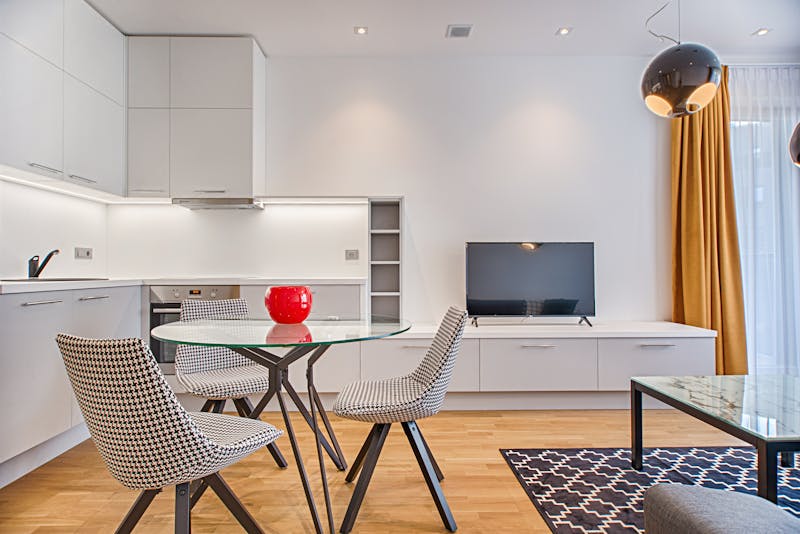
Aesthetic Considerations
Both options offer beautiful finishes and wood species variety. Solid hardwood typically offers a slightly richer, more authentic wood appearance because the entire plank is wood. Engineered hardwood looks virtually identical to solid hardwood to the untrained eye, especially with thicker veneers (4 to 6 millimetres). The choice between them is rarely about aesthetics alone.
Installation Differences
Engineered flooring installs faster and more easily than solid hardwood, which can reduce labour costs. Solid hardwood requires acclimation time in your home before installation, while engineered flooring is ready to install immediately. For renovations requiring quick turnaround, engineered flooring is advantageous.
Summary Recommendation by Homeowner Situation
Choose Solid Hardwood If You:
- Have budget for premium flooring and refinishing services
- Plan to stay in your home 20 plus years
- Live in a climate-controlled environment with stable humidity
- Value the authentic wood experience and longevity
- Are installing on main floors away from moisture sources
- Can commit to regular maintenance and refinishing
Choose Engineered Hardwood If You:
- Are budget-conscious and want real hardwood aesthetics
- Are installing in basements, kitchens, or bathrooms
- Live in regions with humidity fluctuations (British Columbia, Atlantic Canada, Prairie provinces)
- Want low-maintenance, durable flooring
- Are installing radiant heated floors
- Prefer a faster installation process
- Don't plan to refinish flooring in the future
Frequently Asked Questions
Can I Install Hardwood Flooring in My Basement in Canada?
Solid hardwood in basements is risky across Canada due to moisture issues. Engineered hardwood with a moisture barrier is your better choice. Ensure your basement has proper waterproofing and drainage before installing any wood flooring.
How Long Does It Take to Install Each Type?
Engineered flooring typically installs in 1 to 3 days for 2,000 square feet. Solid hardwood takes 3 to 5 days for installation alone, plus 3 to 7 days for on-site finishing and drying time. This makes engineered flooring faster overall.
Can Engineered Hardwood Be Refinished?
Most engineered flooring cannot be refinished because the veneer is too thin. Some premium products with thicker veneers (5 to 6 millimetres) allow one light refinish. Always check the manufacturer's specifications before purchasing.
What's The Best Wood Species for Canadian Homes?
Canadian maple is extremely popular and durable for both solid and engineered options. Oak is also excellent. These species are readily available across Canada, making them cost-effective. For coastal regions, look for flooring with enhanced moisture resistance ratings.
Making Your Final Decision
Both hardwood and engineered flooring are excellent choices for Canadian homes when selected appropriately for your climate, budget, and lifestyle. Solid hardwood offers unmatched longevity and the authentic wood experience, making it ideal for main floors in controlled environments. Engineered hardwood delivers real hardwood beauty with superior moisture resistance, lower cost, and minimal maintenance, making it perfect for challenging spaces and climates.
For professional guidance tailored to your specific home and location, consider consulting with a flooring specialist. Find a Flooring Contractor through Local Skilled Trades to connect with qualified professionals across Canada who can assess your space and recommend the best flooring solution for your needs.
Local Skilled Trades Editorial
Home Services Expert